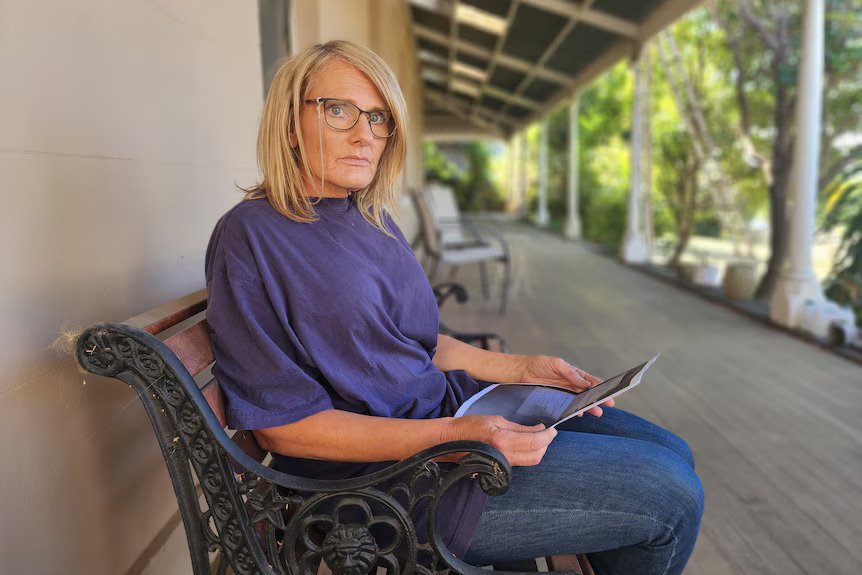
After escaping an abusive partner more than a decade ago, Adriana Carrington felt life was just getting back on track.
She had worked through years of therapy, finally got a mortgage for a new home, and started her own business.
But she says the tax office has now derailed her life by hitting her with an alleged tax debt dating back to the 2008-09 financial year — a debt she never knew existed.
After enduring numerous years, the process becomes immensely challenging as one must sift through historical documents that are unavailable… it’s an utterly dreadful situation. The Australian Taxation Office (ATO) issued notifications to thousands of Australians late last year, informing them or their tax representatives about historical tax debts.
This caused considerable confusion and distress for individuals like Ms. Carrington. Ms. Carrington had to delve into the origins of the debt and discovered through investigation that years ago, her ex-husband had been funneling income into a trust under her name. Despite not directly receiving income from the trust account, its existence incurred a debt in her name.
The situation was further complicated by the fact that she only became aware of the debt when it transitioned from being ‘invisible’ to appearing on her myGov account. In 2015, the ATO deemed the 2008 debt, which was approximately $15,000 at the time, as “uneconomical to pursue.” Subsequently, in 2016, her accountant assured her that this debt had essentially been written off, relieving her of any need to concern herself with it.
Although the debt technically still exists, typically the Australian Taxation Office (ATO) refrains from pursuing debts deemed “uneconomical to pursue” because the costs outweigh the benefits of retrieval, leading to their write-off. However, last year, the ATO revived Ms. Carrington’s debt, alongside purported debts of numerous other Australians.
The fact that these debts were once considered “uneconomical to pursue” and then reinstated now merely appears as a single line reference on her myGov account. These debts had effectively vanished, only to resurface many years later, accompanied by substantial interest charges. The ATO disclosed being owed over $15 billion from 1.8 million entities, predominantly individuals, although this figure could escalate with interest applied to the debts.
The precise increment was not specified; nevertheless, Ms. Carrington has already been subjected to interest charges totaling twice the original debt’s value, with the claimed debt currently standing at $34,000 and continuing to accrue.
Some have drawn parallels between this situation and the controversial Centrelink Robodebt scheme, which pursued welfare recipients for purported debts later found to be seriously flawed by a royal commission.
In numerous Robodebt cases, the targeted welfare recipients had not received overpayments and did not owe the government any money whatsoever. Ms. Carrington refers to it as “Robotax” and describes the experience as mentally taxing.
Despite her pleas, the Australian Taxation Office (ATO) has rebuffed Ms. Carrington’s appeals to waive the debt, which she fears could lead to financial devastation and potential loss of her home. She urges the federal government to intervene.
“At 55 years old, my remaining working years are limited, and unfortunately, I don’t have any superannuation to rely on,” she explains.
“In 2012, when I separated from my husband, I was burdened with a three-page bad credit history, making it impossible for me to secure a home in my name. Over the years, I’ve tirelessly fought, worked, and saved, aiming to reclaim stability. Finally, I succeeded in acquiring a home after losing my previous one to repossession by the bank. This achievement means the world to me. Now, however, the tax office is threatening to seize my family home.
Independent MP Andrew Wilkie also advocates for the federal government to consider waiving debts in certain cases where they are insignificant, outdated, and not the taxpayer’s fault.”
“There’s more than a whiff of Robodebt,” Mr Wilkie says.
“Surely there’s a point where something is totally lost in history, particularly if it’s a small amount of money.
“The ATO should consider waiving a debt in extreme circumstances … when these debts have been almost lost in history, when they haven’t appeared in (peoples) online accounts, and taxpayers have lost visibility of these debts, they shouldn’t then just out of the blue get a threatening letter saying that the money will be taken out of their next tax return.”
Some tax advisers are also frustrated with the ATO and are calling on the government to intervene.
Gail Freeman runs a small accounting firm in Canberra and represents taxpayers who are being pursued for old debts worth as little as a few cents and one who is now deceased.
She says the law needs to be changed to waive these old debts, and that the ATO needs to better communicate with taxpayers when debts arise.
Ms Freeman received notice in October last year of the tiny amounts the ATO now wants to recoup individually from 20 of her clients.
“There were a couple of five cents, a couple of 55 cents, one at 33 cents, and the biggest one was just over $1,000,” she says.
“And they were all really, really old. Most of them were from 2010 or earlier.
She says the client with the biggest debt, of just over $1,000, is no longer alive.
“It’s really difficult when people are deceased going back to their heirs and successors and saying, ‘Well, there’s a debt that you didn’t know about, which the tax office are trying to recover.'”
Ms Freeman says while the amounts are small in the case of her clients, it is still “a very distressing situation”, and she’s had to hold off telling some of them as she tries to negotiate with the ATO and resolve the issue on their behalf.
“People are hurting, businesses are struggling … and to suddenly say, ‘Hey, mate, you’ve got a debt from 14 years ago, which the ATO wants to recover’, is just adding insult to injury,” she says.
“Fourteen years ago, if you’d asked them for $542, it may not have been an issue. Now, if they’ve retired and they’re living on limited pensions, it can make a huge difference.
“It’s just not a good look and it’s not nice.”
Ms Freeman hopes the federal government will step in and change the law so that the ATO can waive these small debts. And she’s calling on the ATO to improve its communication with taxpayers to avoid the situation ever repeating.
She says the next time the ATO decides to write something off as ‘uneconomic to pursue’, people need to know there’s a possibility that debt could be resurrected if not paid.
“Be transparent, be timely, let people know what you’re doing,” she advises.
Associate Professor Ann Kayis-Kumar is the founding director of UNSW’s Tax and Business Advisory Clinic, which provides free tax and business advice for people in financial distress.
She says they have had about 10 clients approach them about this issue and they’ve had to work with the ATO to clear taxpayer debts. One client’s debt had $29,000 worth of interest and penalties levied over more than a decade taking the total debt to $37,000.
“It can be very distressing for clients who’ve had long-term on-hold debts,” she says.
“The sense of anxiety and fear and helplessness is quite profound.
“When it comes to economic stability, particularly in the post-COVID cost of living crisis, it can have a tipping point on a client.”
She says, for those taxpayers in hardship that cannot get an outcome internally with the ATO, there needs to be a law change and that’s up to the federal government.
While laws exist in other countries, such as the United States, that ensure people in serious hardship can have their debts waived, Dr Kayis-Kumar says Australia’s laws are outdated.
“In circumstances where that taxpayer will never be able to pay that debt off it really does represent a legitimate question of whether the best approach is to genuinely release that debt,” she adds.
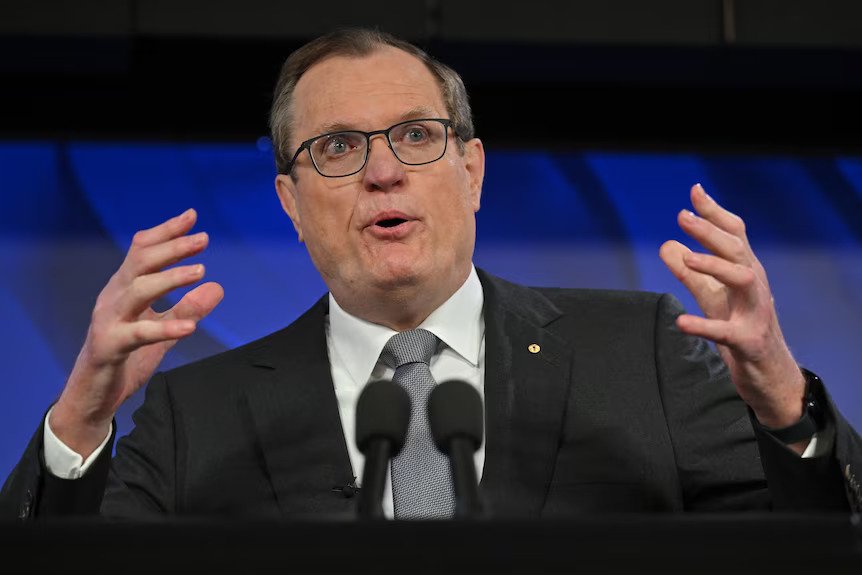
The ATO’s outgoing commissioner Chris Jordan said in a recent speech at the National Press Club that the agency had not handled its communications with taxpayers well.
But he also made clear the agency had been told it has no discretion under the law to waive these amounts and that it’s now a matter for the federal government to decide whether to waive certain debts.
“It was never our intention to cause frustration or concern,” the ATO spokeswoman said.